
source: http://www.crisisgroup.org/home/index.cfm?id=4274&l=1
Africa Report N°113
19 July 2006
FULL REPORT
EXECUTIVE SUMMARY
Nigeria is Africa’s most populous nation and perhaps also its most poorly understood. It has endured six successful and numerous failed military coups, a civil war that cost well over a million lives, three inconclusive transitions to democracy and recurrent factional violence. Despite more than $400 billion in oil revenue since the early 1970s, the economy underperforms, and the great majority of citizens have benefited little. More effective institution-building is imperative.
This background report is the first in a new series on Nigeria. Subsequent analysis and policy recommendations will deal with issues such as the Niger Delta, federalism, inter-communal tensions in the Plateau State and elections. Throughout its 46 years of independent history – 28 years under military rule – analysts, historians and others have often oversimplified the country either in terms of its ethnic divide between Hausa-Fulani, Igbo and Yoruba, or through a religious dichotomy of “the Muslim north against the Christian south”. Demagogues have exploited such social cleavages for their own ends, often fuelling civil strife.
The country’s history since independence suggests, however, that the politicisation of ethnicity and religion and factional mobilisation along these same lines is a direct by-product of the monopolisation of power and assets by ruling elites eager to avoid open and fair competition. With Nigeria’s emergence as a major oil producer, pervasive patron-client networks have developed at all levels of government. Federalism has permitted entitlements to be spread more widely across society but it has, in turn, fuelled a proliferation of state and local institutions that have made governance fragmentary and unwieldy. Unable to obtain their fair share of the country’s wealth, most citizens have been left with two choices: fatalistic resignation or greater identification with alternative hierarchies based on ethnicity, religion or other factional identities.
In the absence of checks and balances, especially during periods of military rule, the state has failed to fulfil most of its major functions, and large segments of the public have ceased to expect social services, public utilities, infrastructure, security or administration from it. Many groups have resorted to self-help measures through ethnic, religious, community or civic organisations. Under the military dictatorship of General Sani Abacha, this dissociation between citizens and government produced a slow-motion version of a failing state. By 1999, the majority of Nigerians were worse off than their parents had been at independence in 1960.
The 1999 return to democracy meant a fresh start. However, the past weighs heavily on the democratic experiment. Widespread corruption and persistent electoral malpractice continue to undermine politics as a whole. Military rule has cast a long shadow, and Nigeria remains dangerously reliant on oil receipts and mired in patron-client networks. New challenges have arisen, with inter-communal clashes across the country causing more than 14,000 deaths since 1999 and displacing more than three million. Militias have sprung up, notably in the oil-rich Niger Delta, where growing tensions are a direct result of decades of environmental harm and political neglect.
Concurrently, Nigeria is striving to assert its political weight in West Africa, across the African continent and beyond. It is all too easy for the world to perceive it only as a major world oil producer and a regional policeman. However, if the international community fails to better grasp the internal dynamics and intricacies, there is a very real potential for the persistent levels of violence to escalate with major regional security implications.
Dakar/Brussels, 19 July 2006
FULL REPORT
RETURN



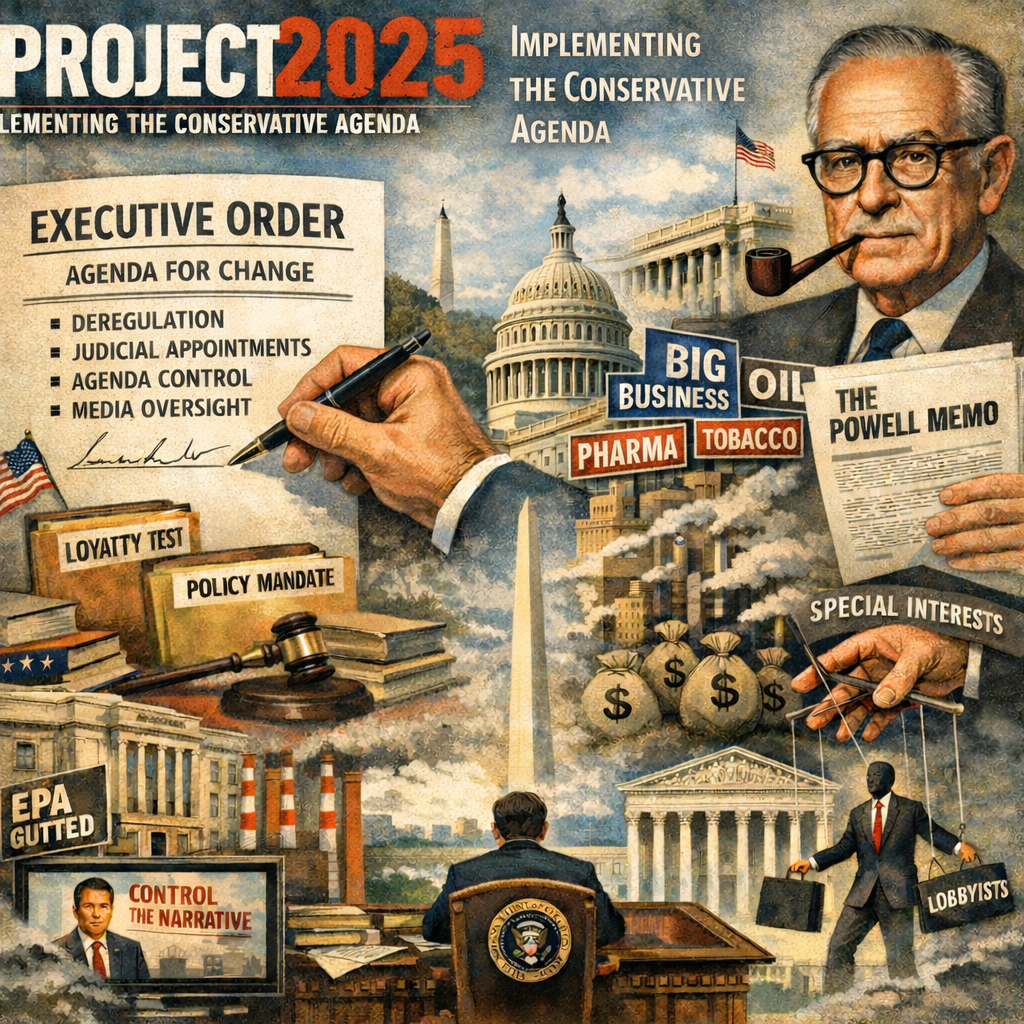
From the Powell Memo to Project 2025: How a 1971 Corporate Strategy Became a Global Template for Power In August 1971, a corporate lawyer named L...
The Market’s Mood Ring: How Volatility Across Assets Traces a Hidden Geometry of SentimentIf you want a fast, honest way to describe modern markets,...
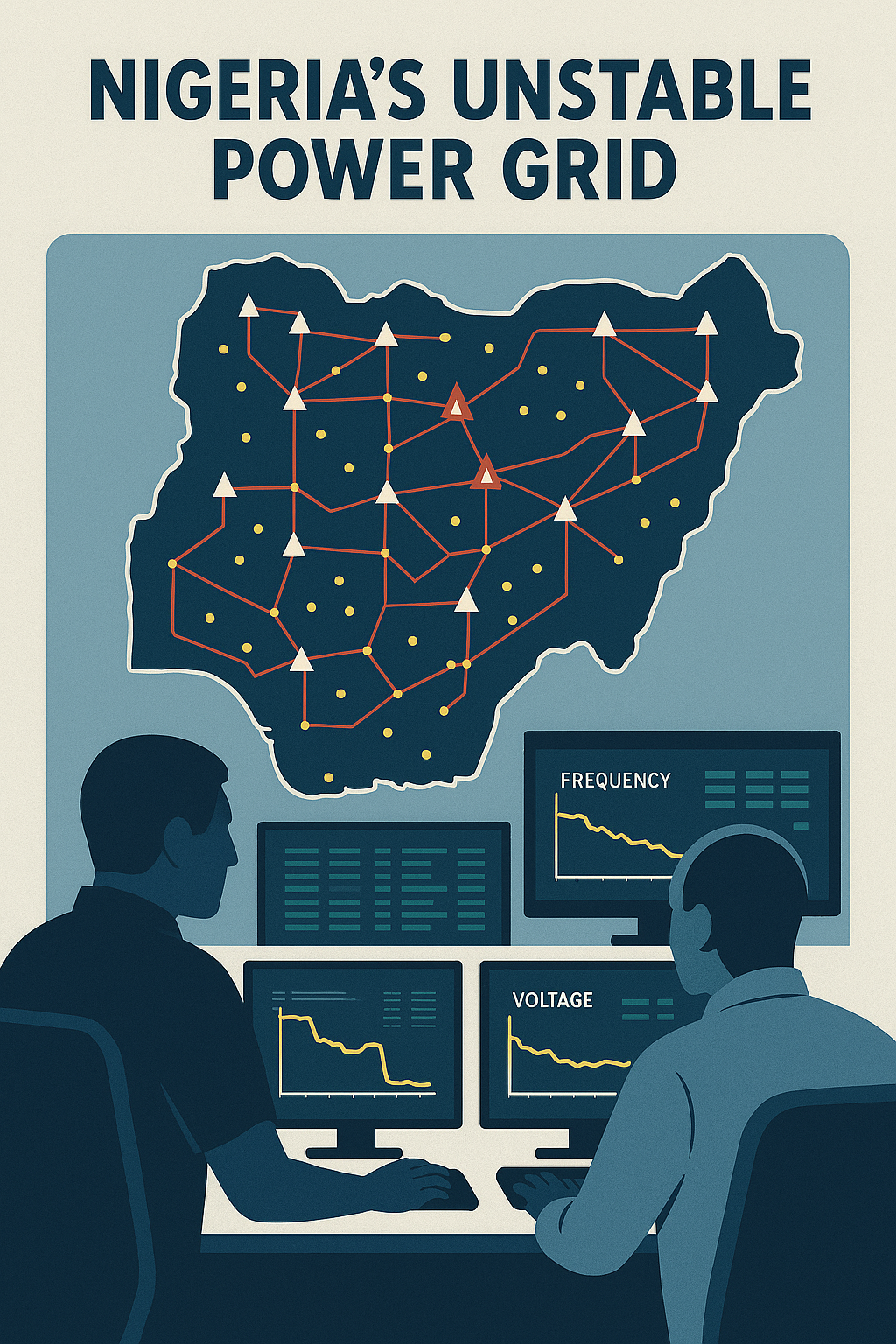
Nigeria’s grid collapses are not ‘bad luck’ – They are a design failure, and we know how to fix themFirst published in VANGUARD on February 3,...
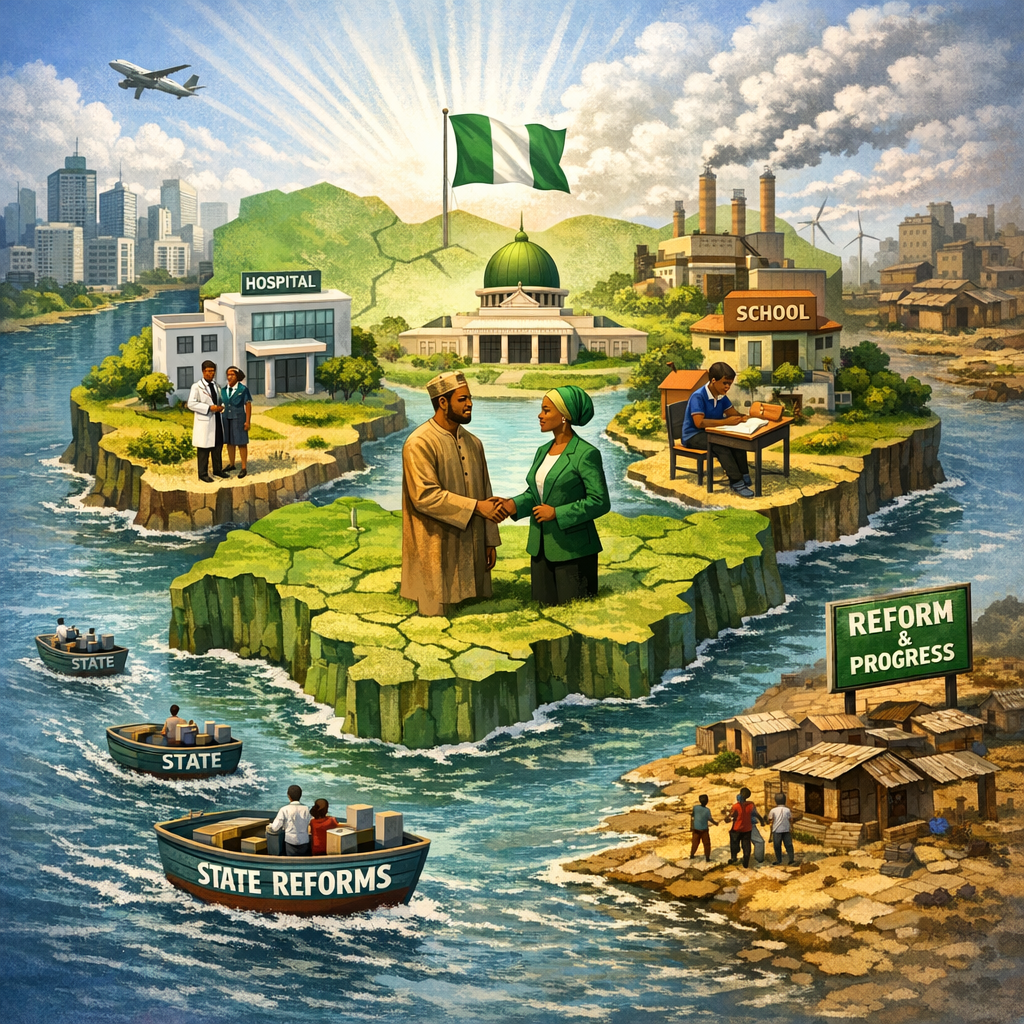
Islands of Credibility: Nigeria’s Best Reform Strategy Starts in the StatesFirst published in VANGUARD on January 31, 2026 https://www.vanguard...
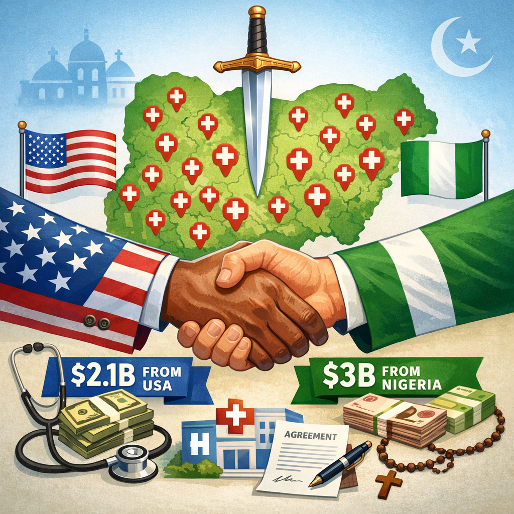
Project 2025 Agenda and Healthcare in NigeriaThe US and Nigeria signed a five-year $5.1B Memorandum of Understanding (MoU) on December 19, 2025, to bo...


Social & Political Issues / Feb 08, 2026
From the Powell Memo to Project 2025: How a 1971 Corporate Strategy Became a Global Template for PowerSocial & Political Issues / Feb 06, 2026
The Market’s Mood Ring: How Volatility Across Assets Traces a Hidden Geometry of SentimentSocial & Political Issues / Feb 06, 2026
Nigeria’s grid collapses are not ‘bad luck’ – They are a design failure, and we know how to fix themSocial & Political Issues / Jan 31, 2026
Islands of Credibility: Nigeria’s Best Reform Strategy Starts in the StatesSocial & Political Issues / Jan 25, 2026
Project 2025 Agenda and Healthcare in Nigeria© 2026 Segun Toyin Dawodu | All rights reserved