
1. EU acknowledges that President Obasanjo has been announced President-elect of the Federal Republic of Nigeria on April 22, 2003 by the competent electoral authority, and we wish to congratulate him. The President now has a clear mandate for his second term.
2. EU welcomes the fact that the presidential, parliamentary and gubernatorial elections in Nigeria were conducted peacefully in most parts of the country and represented an important step for the democratic process in Nigeria, in the context of transition from civilian to civilian administration.
3. EU takes positive note that the Nigerian government invited inter alia EU observers to the country, in order to efficiently observe the electoral process.
4. EU expresses concern about the serious irregularities and instances of fraud which were observed and reported by the EU election observation mission, resulting in a lack of credibility of the electoral process in those states concerned.
5. EU strongly recommends that appropriate measures are taken as provided for under the electoral law of Nigeria and welcomes the decision of all aggrieved parties to settle their disputes peacefully and within the constitutional framework.
6. Furthermore, EU expects that all perpetrators of political violence during the electoral campaign will be prosecuted.
7. EU's confidence in the Nigerian authorities, now that the 2003 elections are over, is to remain focused on the democratisation process, in order to further improve the quality of democracy and increase accountability in Nigeria in the coming period.
8. EU notes with satisfaction the increase in voter participation and in particular, that women, for the first time made up a substantial proportion of those who voted. This constitutes a clear sign of the increasing democratic awareness in the country.
RETURN




From the Powell Memo to Project 2025: How a 1971 Corporate Strategy Became a Global Template for Power In August 1971, a corporate lawyer named L...
The Market’s Mood Ring: How Volatility Across Assets Traces a Hidden Geometry of SentimentIf you want a fast, honest way to describe modern markets,...
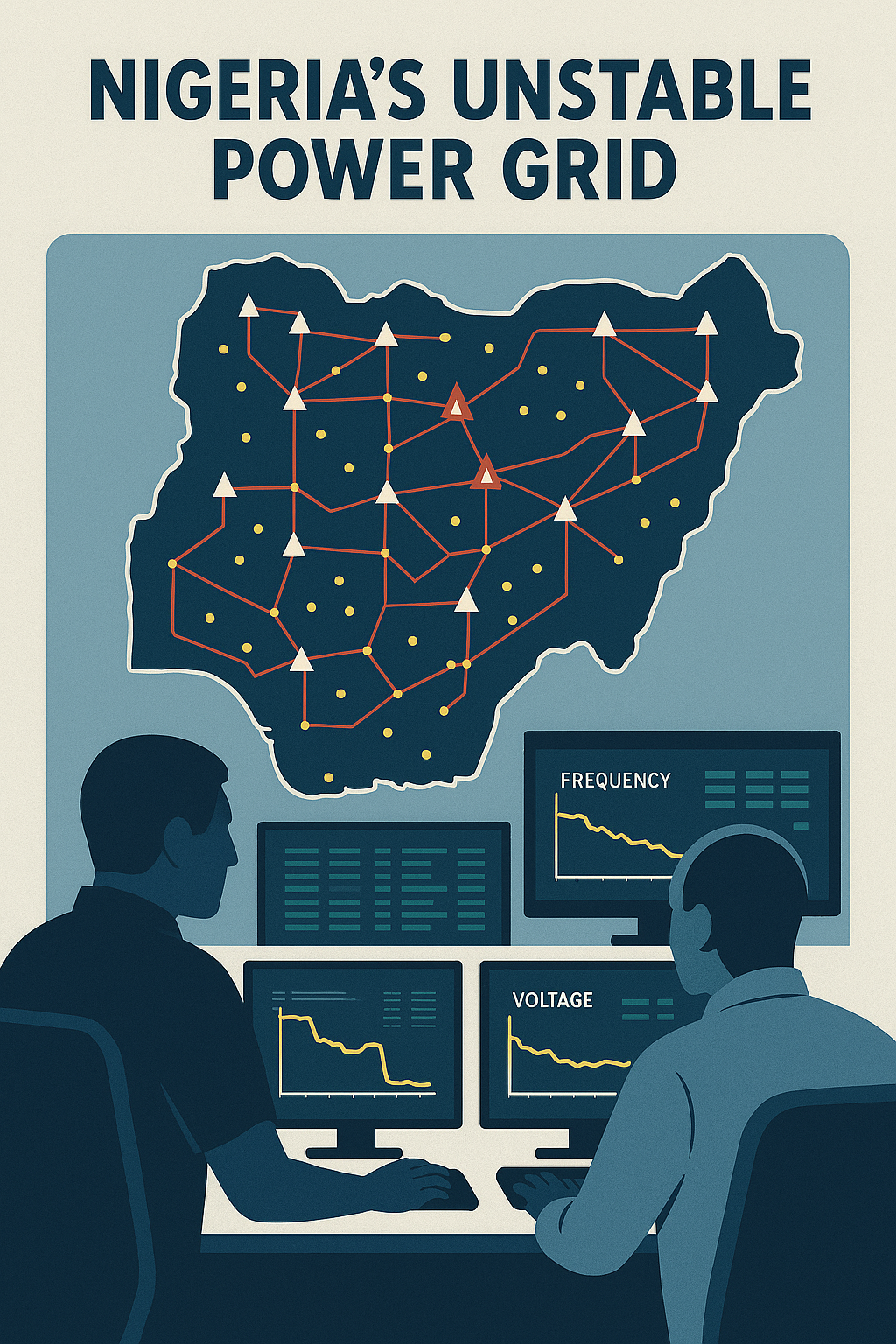
Nigeria’s grid collapses are not ‘bad luck’ – They are a design failure, and we know how to fix themFirst published in VANGUARD on February 3,...

Islands of Credibility: Nigeria’s Best Reform Strategy Starts in the StatesFirst published in VANGUARD on January 31, 2026 https://www.vanguard...

Project 2025 Agenda and Healthcare in NigeriaThe US and Nigeria signed a five-year $5.1B Memorandum of Understanding (MoU) on December 19, 2025, to bo...


Social & Political Issues / Feb 08, 2026
From the Powell Memo to Project 2025: How a 1971 Corporate Strategy Became a Global Template for PowerSocial & Political Issues / Feb 06, 2026
The Market’s Mood Ring: How Volatility Across Assets Traces a Hidden Geometry of SentimentSocial & Political Issues / Feb 06, 2026
Nigeria’s grid collapses are not ‘bad luck’ – They are a design failure, and we know how to fix themSocial & Political Issues / Jan 31, 2026
Islands of Credibility: Nigeria’s Best Reform Strategy Starts in the StatesSocial & Political Issues / Jan 25, 2026
Project 2025 Agenda and Healthcare in Nigeria© 2026 Segun Toyin Dawodu | All rights reserved