
As part of the civil society engagement with the National Political Reform Conference (NPRC) Abuja, Global Rights: Partners for Justice in conjunction with ActionAid International Nigeria convened a meeting on civil society advocacy strategies in engaging the NPRC from April 21st to 23rd 2005.
Participants at the conference observed that:
CONTEXT
bullet
There is no internal democracy in most Nigerian Political Parties. The best example is the ruling Peoples’ Democratic Party (PDP) whose reform programme appears to be entrenching the dictatorship of President Olusegun Obasanjo.
bullet
The circulation of an alternative “Draft Constitution” to members of the ongoing National Political Reforms Conference by the Presidency reinforces the allegation that there is a hidden agenda to continue the President’s tenure beyond 2007.
bullet
That the talk about the religious imbalance in the composition of the National Political Reform Conference, though real, is a distraction that obfuscates the real issues concerning the destiny and future of the country.
ISSUES
· In Nigeria, citizenship is expressed at two levels, the National as well as State. The key problem over citizenship has to do with how citizenship is interpreted to mean indigeneship, and indigeneity is the basis of claiming privileges.
· Married women are often denied state citizenship when indigeneity of their husbands is different from that of their fathers.
· Indigeneship status defined by membership of a local ethnic community is the basis of inclusion or exclusion. Those who are excluded are defined as settlers and hence cannot enjoy certain rights and privileges. The contestation between “indigenes” and “settlers” often result in violent communal conflicts.
· Despite the fact that women have been excluded or marginalised in the Political and Public spheres, there have been no commitments to implement the principle of Affirmative Action to redress the situation in Nigeria.
· There is increasing social and economic hardships arising from the harsh policies of successive governments towards the poor and weak citizens of Nigeria.
· Federalism is skewed in a direction that tilts towards unitary system of government.
After deliberations, participants recommended as follows:
. The Flaws and defects in Nigeria’s federal system which do not conduce to the effective management of diversity should be addressed. The flaws arise from over-centralization of power and resources, and the erosion of autonomy for the constituent units, which consequently accounts for the protracted ethno-religious and political conflicts since the return to democratic governance.
· Citizenship at the State level should be defined by residence and not by indigeneity.
· There should be new constitutional provisions on the equality of the sexes and Affirmative Action for women.
· Political Parties should adopt and use a clear policy of quota in the nomination of women politicians within political parties.
· That the process and procedure for the appointment and removal of judges of the State High Courts must be reviewed to guarantee quality, independence, tenure and transparency.
· That the office of the Attorney General of the Federation and that of the Attorney Generals of states should be depoliticized while the Minister of Justice and Commissioner of Justice can respond to political issues arising from governance.
· There should be a review of the Fundamental Rights Enforcement mechanism in such a way that those whose rights are violated do not have to seek leave of the courts, among others.
· The Proportional Representation (PR) system should be adopted as part of the reform of the electoral process. One way to accomplish this is to ensure that the political parties generate a list of candidates that are ranked according to their importance and voters make choices on the basis of the candidates listed by the party.
· Each Political Party should have a threshold of 25% for any contested seat.
· The Nigerian economy and state policy should be redirected in such a way that makes the state socially-sensitive to the basic needs of the people such as education, health and shelter.
Members of the NPRC should be patriotic and have a sense of history to ensure that the deliberations and resolutions of the conference reflect the true wishes and aspirations of the Nigerian people. The NPRC should endeavour to respect our democratic institutions and act in accordance with due process and the rule of law.
The report of the various committees as well the outcome of the conference should be made public so that the Nigerian people can have access to them and make input into the final recommendations.
Signed:
Sam Egwu, Citizens’ Forum for Constitutional Reform (CFCR)
Festus Okoye, Transition Monitoring Group (TMG)
Jide Ojo, Electoral Reform Network (ERN)
Abiola Akiode, Women’s Organization for a Representative National
Conference (WORNACO).
Charmaine Pereira, Network for Women’s Studies in Nigeria (NWSN)
Abubakar Momoh, Nigerian Political Science Association (NPSA).
RETURN



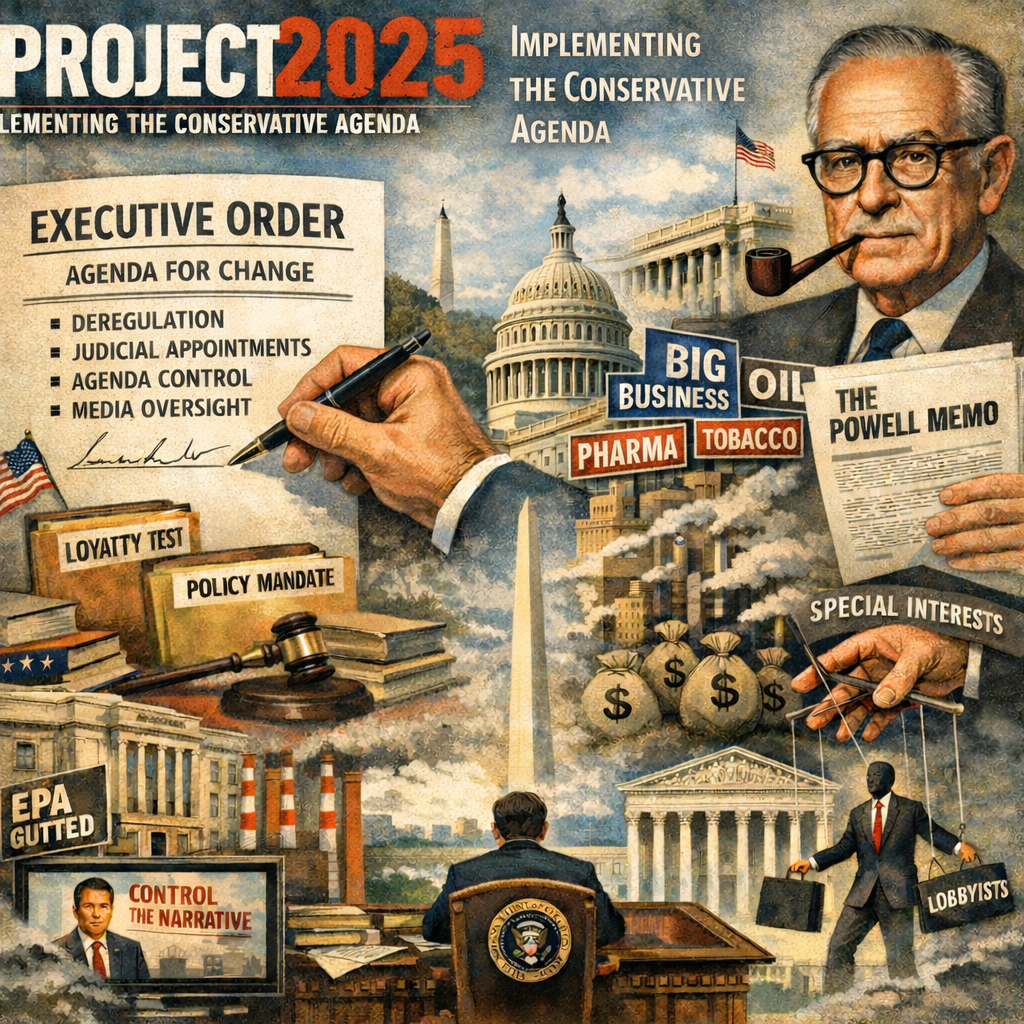
From the Powell Memo to Project 2025: How a 1971 Corporate Strategy Became a Global Template for Power In August 1971, a corporate lawyer named L...
The Market’s Mood Ring: How Volatility Across Assets Traces a Hidden Geometry of SentimentIf you want a fast, honest way to describe modern markets,...
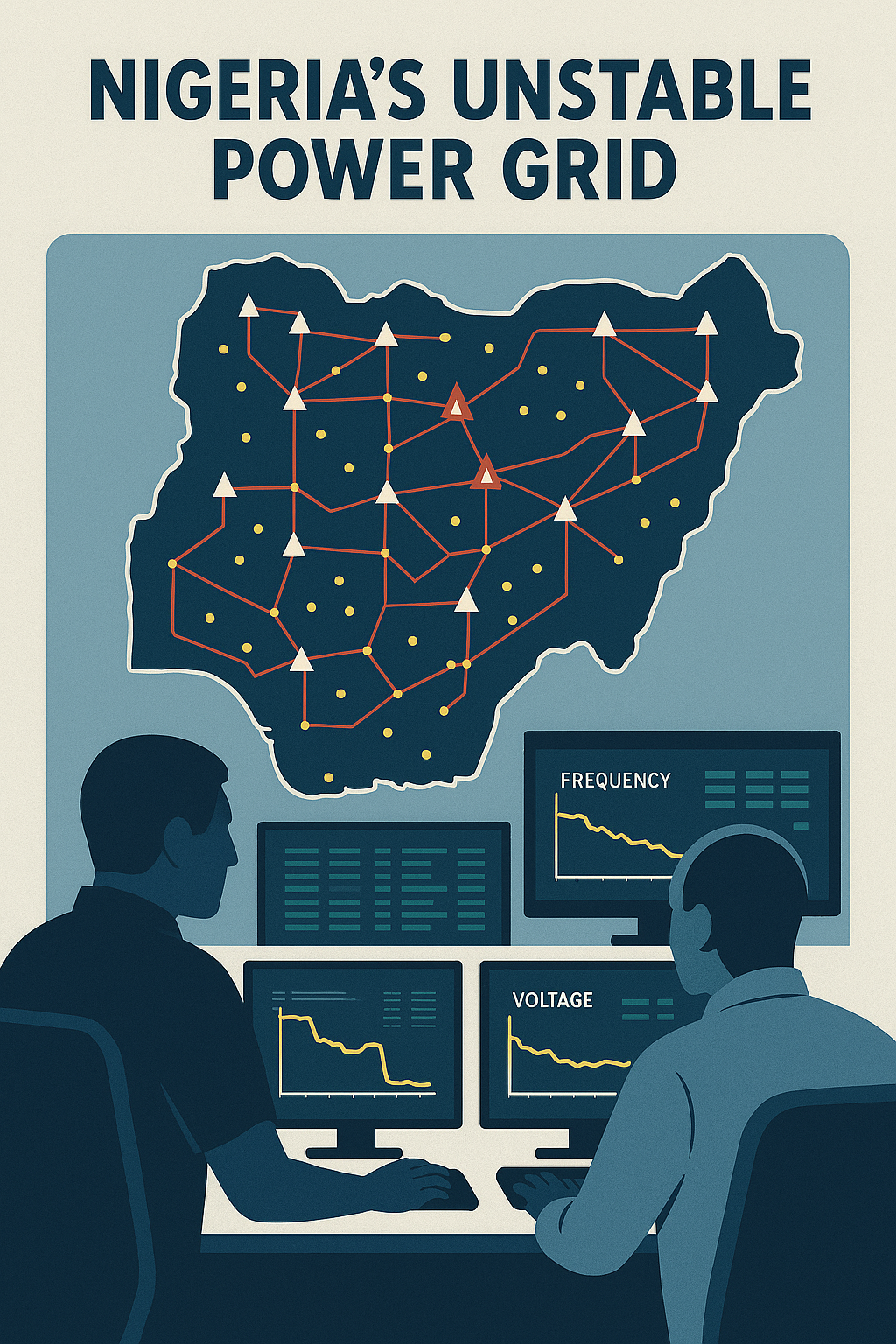
Nigeria’s grid collapses are not ‘bad luck’ – They are a design failure, and we know how to fix themFirst published in VANGUARD on February 3,...

Islands of Credibility: Nigeria’s Best Reform Strategy Starts in the StatesFirst published in VANGUARD on January 31, 2026 https://www.vanguard...
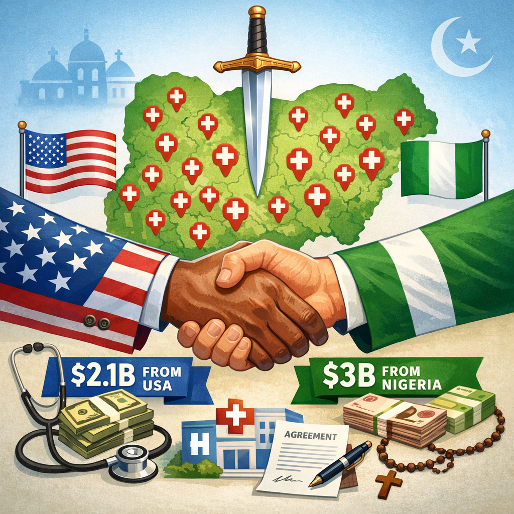
Project 2025 Agenda and Healthcare in NigeriaThe US and Nigeria signed a five-year $5.1B Memorandum of Understanding (MoU) on December 19, 2025, to bo...


Social & Political Issues / Feb 08, 2026
From the Powell Memo to Project 2025: How a 1971 Corporate Strategy Became a Global Template for PowerSocial & Political Issues / Feb 06, 2026
The Market’s Mood Ring: How Volatility Across Assets Traces a Hidden Geometry of SentimentSocial & Political Issues / Feb 06, 2026
Nigeria’s grid collapses are not ‘bad luck’ – They are a design failure, and we know how to fix themSocial & Political Issues / Jan 31, 2026
Islands of Credibility: Nigeria’s Best Reform Strategy Starts in the StatesSocial & Political Issues / Jan 25, 2026
Project 2025 Agenda and Healthcare in Nigeria© 2026 Segun Toyin Dawodu | All rights reserved