

12 June 2006 – The presidents of Nigeria and Cameroon today signed an agreement settling a decades-old, sometimes violent, border dispute over the oil-rich Bakassi Peninsula following intensive mediation over the weekend by United Nations Secretary-General Kofi Annan, seeking to avert a potential crisis flashpoint in already troubled West Africa.
“The signing ceremony which has brought us together crowns a remarkable experiment in conflict prevention by Cameroon and Nigeria,” Mr. Annan said of the agreement which provides for the withdrawal of Nigerian troops within 60 days, with a possible 30 day extension, from Bakassi, which the International Court of Justice (ICJ), the UN’s Supreme judicial body, awarded to Cameroon in 2002.
“With today’s agreement on the Bakassi Peninsula, a comprehensive resolution of the dispute is within our grasp,” he added at the ceremony at the Greentree Estate in Manhasset outside New York City. “The momentum achieved must be sustained.”
Under the agreement transitional arrangements will be completed in two years for the Peninsula, which was the last of four areas to be demarcated in accordance with the ICJ decision.
Before Mr. Annan spoke, President Olusegun Obasanjo of Nigeria, President Paul Biya of Cameroon and the Secretary General signed and exchanged the agreements and shook hands to the applause of those assembled in the wood-panelled room. Behind them the blue UN flag was flanked by Nigeria’s green and white banner and the green, red and gold colours of Cameroon.
Mr. Annan has been closely involved in the issue ever since the ICJ decision on the 1,600 kilometres border stretching from Lake Chad in the north to Bakassi in the south.
The UN-sponsored Cameroon-Nigeria Mixed Commission (CNMC), chaired by his Special Representative for West Africa, Ahmedou Ould-Abdallah, has been working over the past several years to finally resolve all issues of the dispute, which has its origin in the colonial borders established in the early 20th century by Britain and Germany.
Located on the Gulf of Guinea, the Peninsula had been the subject of intense, at times violent disputes between the two countries for dozens of years when Cameroon referred the matter to the ICJ in 1994. In 2002 the World Court, as it is also known, in a binding decision awarded it to Cameroon, citing a 1913 agreement between Britain and Germany.
But the modalities of Nigeria’s final withdrawal had defied the efforts of the CNMC until Mr. Annan on Friday began days of intensive mediation with the two presidents.
As late as last year the dispute was still claiming victims – two Cameroonian soldiers killed and another wounded.
Also attending the ceremony as witnesses were the Permanent Representatives of France, Germany, the United Kingdom and the United States, who will help implement the agreement.
“Our agreement today is a great achievement in conflict prevention, which practically reflects its cost effectiveness when compared to the alternative of conflict resolution,” President Obasanjo said. “Its significance, therefore, goes much beyond Nigeria and Cameroon. It should represent a model for the resolution of similar conflicts in Africa, and I dare say, in the world at large.”
“Reason and wisdom have been our main guides,” Cameroon’s President Biya added. “By signing the present agreement we have armed ourselves with an efficient instrument to implement the court’s decision bringing a definitive conclusion to our border dispute.”
Mr. Annan noted the “stunning” cost effectiveness of the CNMC, which has no peacekeeping element and costs about $5 million dollars a year compared with the $200 million dollars a year annually needed for the UN’s Ethiopia and Eritrea mission.
Previous agreements to finalize the ICJ’s decision have fallen through, including one which was to have seen the final transfer of authority from Nigeria to Cameroon take place between 15 June and 15 September 2004.
RETURN




From the Powell Memo to Project 2025: How a 1971 Corporate Strategy Became a Global Template for Power In August 1971, a corporate lawyer named L...
The Market’s Mood Ring: How Volatility Across Assets Traces a Hidden Geometry of SentimentIf you want a fast, honest way to describe modern markets,...
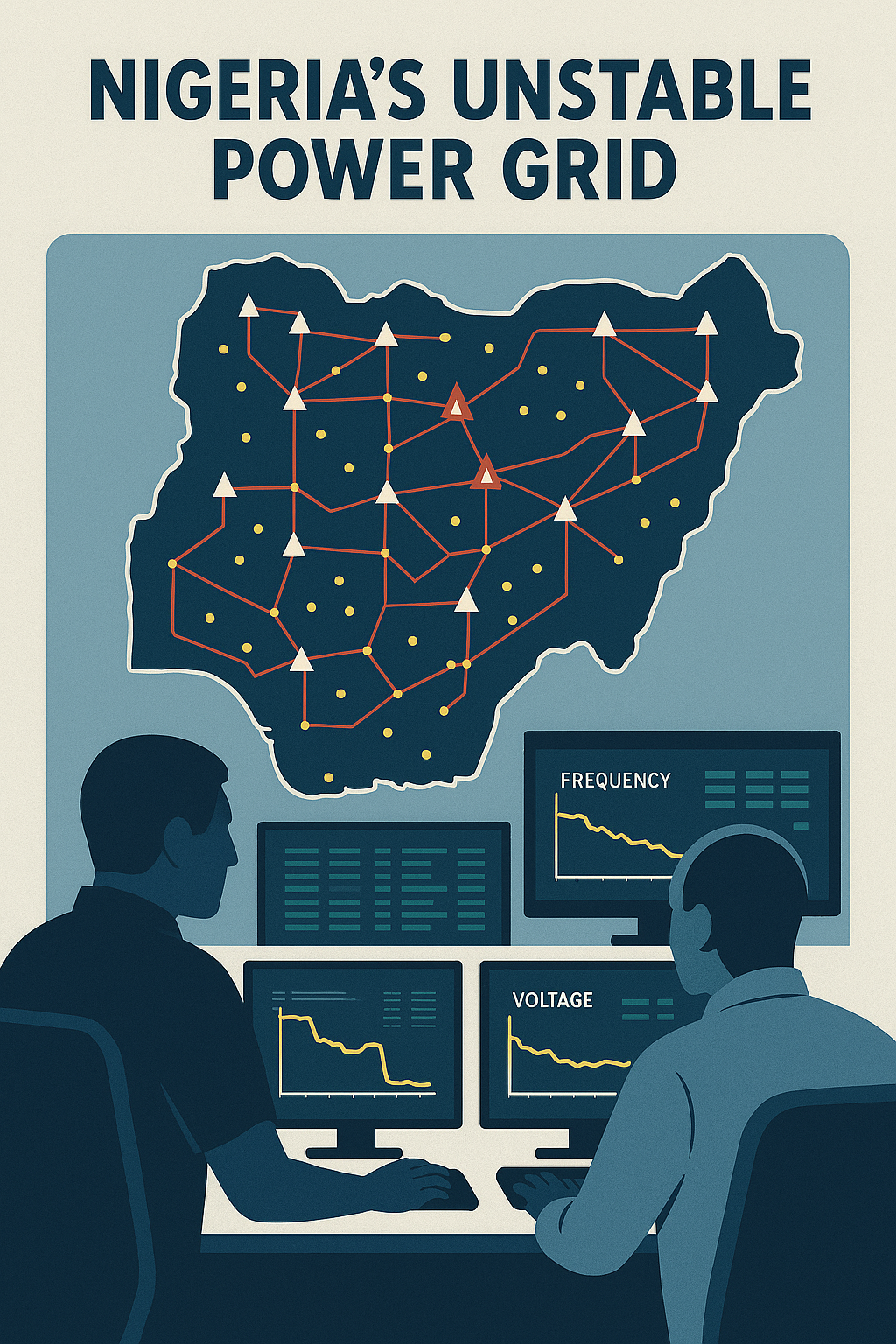
Nigeria’s grid collapses are not ‘bad luck’ – They are a design failure, and we know how to fix themFirst published in VANGUARD on February 3,...

Islands of Credibility: Nigeria’s Best Reform Strategy Starts in the StatesFirst published in VANGUARD on January 31, 2026 https://www.vanguard...
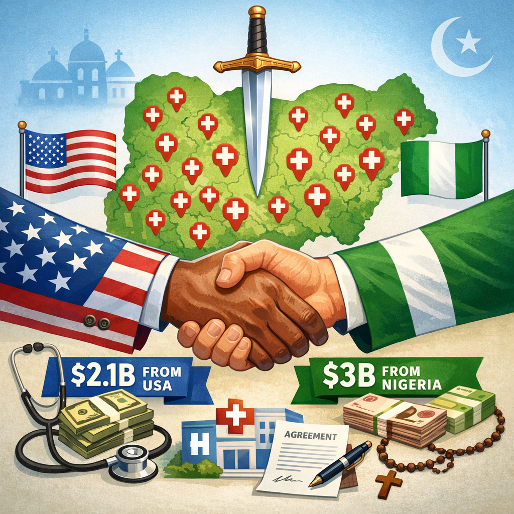
Project 2025 Agenda and Healthcare in NigeriaThe US and Nigeria signed a five-year $5.1B Memorandum of Understanding (MoU) on December 19, 2025, to bo...


Social & Political Issues / Feb 08, 2026
From the Powell Memo to Project 2025: How a 1971 Corporate Strategy Became a Global Template for PowerSocial & Political Issues / Feb 06, 2026
The Market’s Mood Ring: How Volatility Across Assets Traces a Hidden Geometry of SentimentSocial & Political Issues / Feb 06, 2026
Nigeria’s grid collapses are not ‘bad luck’ – They are a design failure, and we know how to fix themSocial & Political Issues / Jan 31, 2026
Islands of Credibility: Nigeria’s Best Reform Strategy Starts in the StatesSocial & Political Issues / Jan 25, 2026
Project 2025 Agenda and Healthcare in Nigeria© 2026 Segun Toyin Dawodu | All rights reserved